
Dragon Shelter Water Dragon Companion
The first dragon you meet: teal, shy, and the reason grandpa's farm starts watering itself again.
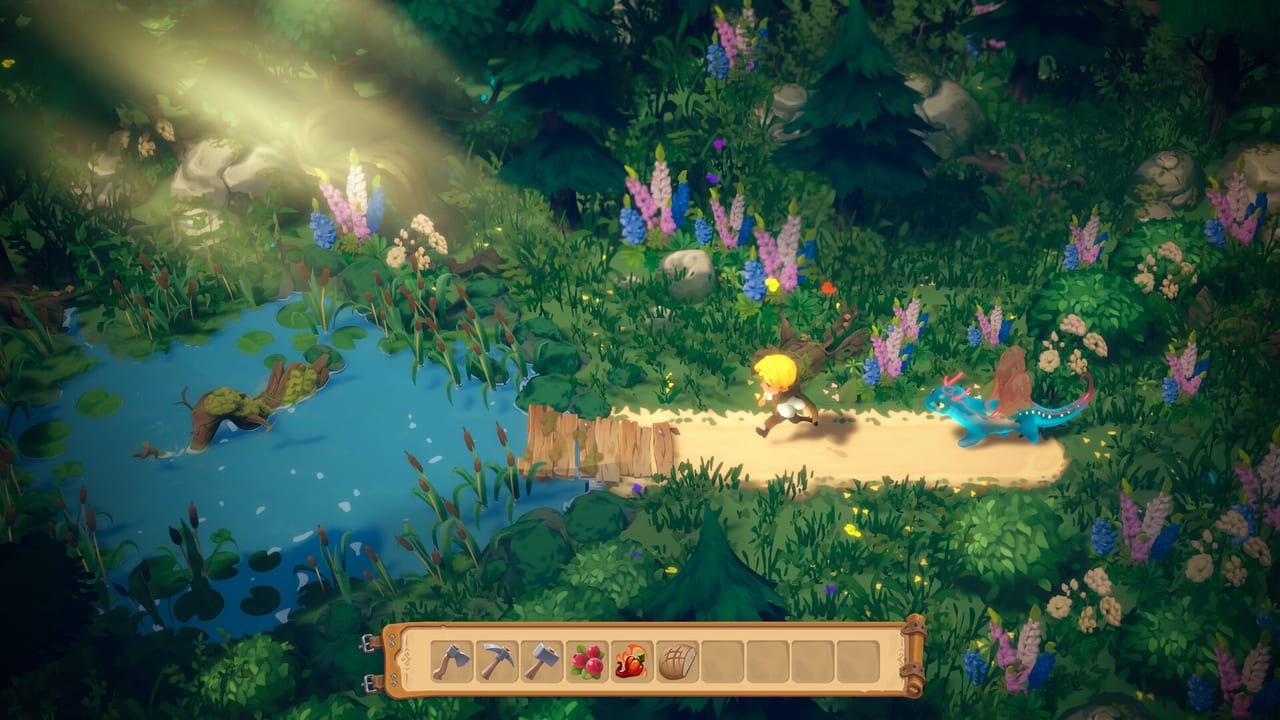
The water dragon is the first companion in Dragon Shelter and the first creature Wild Forest Studio ever built for the game. It is teal-blue, small enough to sleep on a house mat, and scared of you when you find it at the murky pond. Everything else on grandpa’s farm waits on that first bond. If you skip the pond and rush town orders, crops dry out and the kitchen has no reliable water helper. If you take the trust steps in order, the same dragon waters beds, terraforms with a jet, and puts on a chef hat beside you.
This page is a demo-honest care sheet. The Steam demo is playable and walks the opening days. The full game launches September 24, 2026 with more dragons, seasons, and biomes. Hunger and mood will matter more toward launch because the studio is still tuning those systems. Do not treat this page as a finished bestiary entry for a named legendary. There is no proper name here. Call it the water dragon.
First meeting at the murky pond
After you clear a little of the farm and start cooking, the water dragon shows itself near the pond. Examine it and the game is blunt: the dragon looks terrified, and you have to earn its trust. The pond water is murky. That is not set dressing. The shore has patches of earth that glow with dragon magic. Plant water flowers on those glowing patches. Their roots purify the water, which is how you show you mean no harm.
Water flowers are the S-rank trust item of the opening. Keep extra seeds. The dragon is drawn to them, may nibble them, and stays calmer when the pond looks clean. If you plant wheat first and ignore the shore, the dragon stays skittish and will not water for you. The farming guide covers bed types; the getting started page puts the pond on the first-day route. If you are following a longer path, the demo walkthrough times the meeting after the kitchen is usable.
Once the water clears, the dragon is still hungry and a little down. Berries work. Select berries from the hotbar and give them to the dragon. Then pet it (right-click on mouse, or the interact bind on a gamepad). Grandpa’s line in the script is that dragons are the most cheerful creatures around, so a second pet is not wasted. A spark of happiness can appear after a good moment. Hold onto it. When the dragon slumps later, giving that spark back steadies it. That is the demo’s way of saying mood is real even while the meters are still being tuned.
Watering, terraforming, and the flute
After trust, the water dragon can focus its element. It creates a water jet and can control the strength. Point the flute at a target and ask it to destroy or reshape: stumps, stone, blocked stairs, stubborn rocks on a path. The same jet waters garden beds without you standing there with a can. In practice, plant, step back, and let it work. If it sprays the wrong tile, you aimed the flute at the wrong thing.
The flute is the language. Dragons do not parse chat. Hold the flute, left-click (or the equivalent bind) on the object, and wait for the jet. The controls page lists the input; this page is about why you use it. A happy water dragon will cut a tree or break stone that rusty tools struggle with. An unhappy one wanders back to the pond. Feed, pet, and plant another water flower before you assume the flute is broken.
Terraforming in the demo is local, not a whole-biome paintbrush. You open space around the house, clear a path to the kitchen, and later help the town with water tasks such as filling a barrel when someone asks. The full game promises magical farming and biome restoration, with dragons helping push back creeping desolation. That is launch talk. In the demo, think in tiles: this shore, this bed, this rock, this barrel.
Kitchen, house, and hats
The water dragon loves to help in the kitchen and loves a meal of its own. Clear the outdoor kitchen of grass, read the jam recipe, and put on your chef hat. The dragon can wear one too. With a hat on, it joins the line: fetching water for dough, standing at a station, or finishing a step while you plate. Jam is berries plus sugar and heat. Bread is wheat, water, kneading, oven. The dragon’s water breath can skip a bucket on some steps. That is useful, not a license to ignore layout. If stations are a maze, the dragon gets stuck and wastes ingredients. Rearrange, call it with the flute, and keep wood in the chest.
Kitchen work with a dragon is still single-player. You are not handing a second controller to a friend. You are teaching one creature a recipe. The cooking guide is the recipe list; this page is the companion’s role. After a long cook, let the dragon eat. Berries alone will not fill either of you forever, which is why wheat and jam become the town loop.
At night the water dragon sleeps on a mat in the house, not in a separate dragon hut. Concept art showed elemental houses, but the team leaned toward dragons living with the character. In the demo, that reads as a mat, a nap, and a creature that follows you home. If you lock it outside or never return to the house, mood drops. Put the mat somewhere you will see it when you wake up.
Hats are optional equipment with a preference. A brown witch hat in grandpa’s stash is sized for a dragon head. Chef hats are for kitchen shifts. If a dragon refuses a hat, it is the wrong hat for the moment, not a bug you must force. Play first, dress second.
Care that will get stricter
Feed berries after the pond, then move toward cooked food as the kitchen comes online. Pet when the dragon looks down. Plant water flowers whenever the shore dulls. Do not skip sleep. Wild Forest Studio has said hunger and mood will affect play more toward launch, and demo players already notice when they forget to feed. A neglected water dragon is not a sprinkler you can ignore overnight.
Tools matter beside the dragon, not instead of it. Rusty axe, hammer, and pickaxe get you through the first clearing. Stone upgrades from town let both of you work faster. You can hand a stone pickaxe to the dragon and watch it enjoy the job. Rusty tools are C-rank on the tier list until you replace them. The dragon does not make a rusty head cut like stone.
Common mistakes
Planting wheat on the glowing shore instead of water flowers. The shore is a trust puzzle, not a bonus crop tile. Forgetting berries after the water clears, then wondering why the jet never starts. Aiming the flute at the dragon instead of the rock. Leaving the kitchen as a grass patch and expecting a chef hat to fix pathing. Running to town for Rufus’s jam before you have a dragon that will water the berry bushes. If you want the town loop, you still start at the pond.
The water dragon is S-tier for the demo opening because nothing else irrigates, purifies, or gates the first terraforming. The fire dragon is a later tease with different soil. Do not wait for fire to water wheat. Rank both on the tier list, keep townsfolk orders on townsfolk, and use the farm checklist so the mat, the flute, and the flower seeds stay in the same morning routine. For PC specs before you boot the demo, see system requirements. Launch timing lives on the release date page.
Frequently Asked Questions
Quick answers to the most common Dragon Shelter questions.
How do I befriend the water dragon?
Find it at the murky pond, plant water flowers on the glowing shore patches, then feed berries and pet it. The flowers purify the water and show you mean no harm. Full order is in the demo walkthrough.
What does the water dragon do on the farm?
Does the water dragon have a proper name?
Not on this wiki. Call it the water dragon. Do not copy fan nicknames into a guide as if they were official.
Can it wear a chef hat?
Yes. Both demo dragons can wear chef hats in the outdoor kitchen. The hat marks a cooking shift. Kitchen work is still single-player.
Why is my water dragon ignoring the flute?
Hunger or mood is usually the cause. Feed, pet, plant water flowers, and let it sleep on the house mat. The studio is still tuning those needs toward the September 24, 2026 launch.
Is the water dragon in the Steam demo?
Yes. It is the first companion and the water-based terraforming tutorial. The demo is playable on Steam. Confirm controls on the controls page.