
Dragon Shelter Jam, bread, orders, and a dragon in a chef hat
Learn the outdoor stations, feed Rufus, and work around cramped demo pathing.
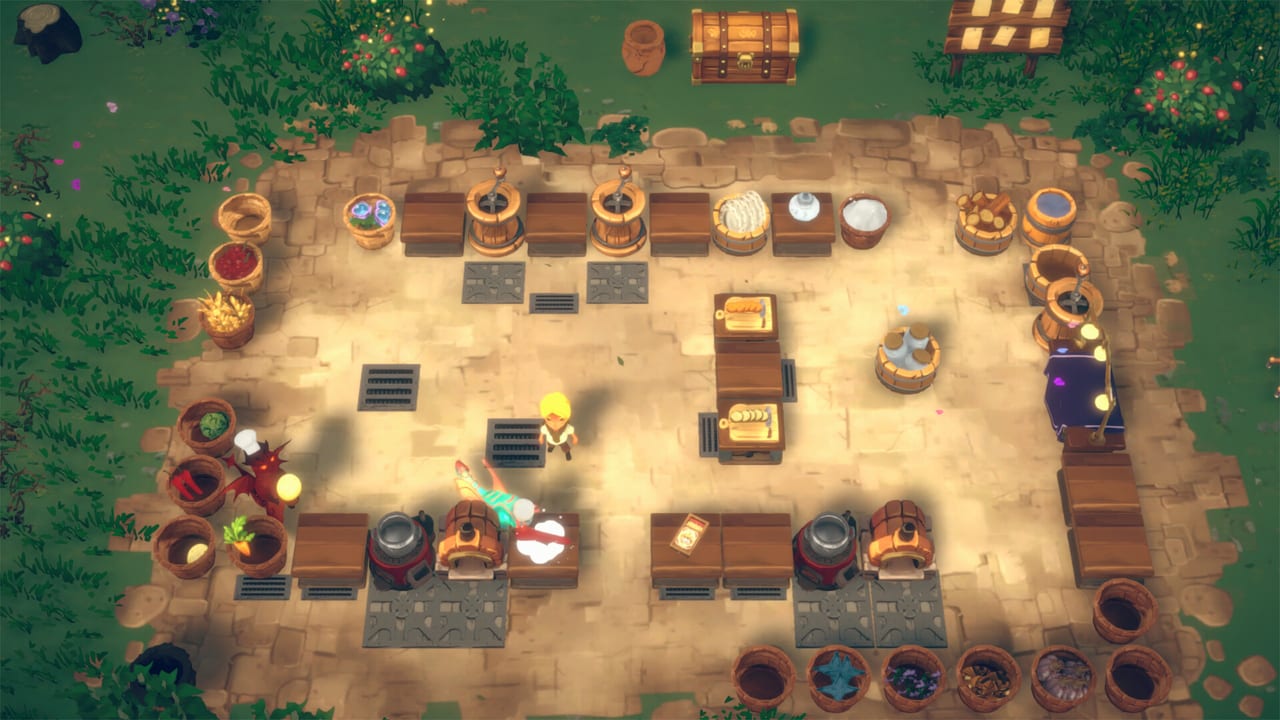
Cooking is the heart of Dragon Shelter, not a side stove you tap after farming. Meals rebuild a gloomy town, raise trust, and give every harvest a destination. The kitchen in the demo is outdoors, close to the farm, and small enough that a helpful dragon can block a doorway. You can download the demo on Steam and learn jam, bread, and starter orders in a single-player save. A dragon at the counter does not add a second human. The full game launches September 24, 2026; later kitchens may grow, but this page describes the slice you can play today.
Bring ingredients from farming. Bring a calm creature from dragon care. If you still do not know how to pick up a stack of flour, open controls. Rufus and the other four townspeople live on townsfolk in roster form; here they are customers.
Walk the outdoor kitchen before you take tickets
Do not accept three orders and then look for a miller. Walk the layout. Find storage, the miller, the wet-and-roll space, the oven, the jam station, and the plate where finished food leaves. The demo kitchen is cramped on purpose in player feedback: stations sit close, paths are narrow, and a dragon body fills them. Leave one tile of courtesy around ovens so you can pull a tray without climbing over a tail.
Fuel is part of mise en place. Wood and sticks from the farm feed the oven. A recipe that needs a light wants you to have that light before dough is ready, not after. Matches and wood are easy to forget when you are proud of a wheat harvest. Carry them with the grain.
Orders are dynamic enough that you should read each ticket. Starter recipes cluster around jam and bread because those two teach fruit versus grain, pot versus oven, and “quality” versus “edible.” If a ticket asks for something you have not grown, go plant it instead of standing in the kitchen hoping the chest restocks itself.
Bread is a chain, not a button
Bread starts in a bed. Plant wheat-like crops, water them (or let the water dragon do it), harvest, and carry the grain to the miller. Mill flour. Wet the flour. Roll dough. Put the dough in an oven that already has wood and a way to light. Wait. Pull the loaf. That sequence is the demo’s argument about cooking: effort is the point. Skipping a station because another farm game hides it behind one prompt will stall you in front of a cold oven.
Time the chain against the day HUD. Spring afternoons disappear while dough sits. If you are close to sleep, finish the bake or store the dough rather than lighting a fire you cannot tend. Right-click sleep in the house bed ends the day whether the loaf is golden or not.
Bread feeds townsfolk and proves the miller is not scenery. Keep a wheat bed cycling whenever bread tickets exist. Extra flour is happier in a chest than extra unharvested stalks decorating the field.
Jam, quality, and why Rufus is hungry
Jam is fruit plus patience. Berries are the demo’s reliable jam crop. Cook them at the jam station instead of eating every handful on the walk back from the pond. Rufus wants quality jam because traders stopped coming. That line is the kitchen’s story hook. A thin, scorched jar will not replace a trade road. Make a careful batch, keep one jar back, and deliver the good one.
Quality here is about not rushing. Do not start jam with a starving dragon screaming for berries in your pocket. Feed the dragon first, then cook. Do not start jam while an oven fire is still spreading beside you. The screenshots of kitchens on fire are funny until a ticket fails. Clear the station, then boil fruit.
If an order completes and nobody is standing there to take it, walk it into town. The outdoor kitchen is still on the farm; the people are not. Five townspeople can be met in the demo. Only Rufus is named in these guides. Deliver, talk, and come home with the next ask rather than assuming a magic chute.
Dragon helpers, chef hats, and the flute
Both the water dragon and the fire dragon can wear chef hats and work stations when the slice allows it. Assign a job, then watch for a minute. A dragon that understands the miller is a gift. A dragon that wedges itself between the oven and the jam pot is the demo’s most famous complaint. Player feedback after Wholesome Direct asked for rock-solid kitchen behavior: no getting stuck, no wasted ingredients, a flute that always answers. Until those fixes land in later builds, you are the fail-safe.
Use the flute to speak to dragons. If it fails, wait and try again, or walk over and right-click. Do not dump more ingredients onto a blocked station “to keep the dragon busy.” That is how food disappears. Pull the dragon out of the kitchen, send it to water beds, cook the order yourself, then invite it back for a simpler station. Cooking together is still single-player. You are one farmer giving directions on one save.
Hats are cute and useful as a visual “this creature is on kitchen duty” flag. Take the hat off in your head when you need watering. The farm dries out while you film a perfect pastry shot.
Known demo snags and how to cook around them
Pathing: dragons get stuck. Leave wider gaps than the furniture wants. Reassign often. If a body is clipped into a counter, flute, walk, pet, and retry.
Flute: sometimes no answer. That is a known issue, not you failing a hidden rhythm game. Approach and use E or right-click.
Layout: cramped. You may not get a huge expandable kitchen in the demo. Place only what you need. An extra chest in a doorway is a future stuck dragon.
Wasted ingredients: happens when a helper cannot finish a step. Prefer to run delicate stages yourself. Let the dragon haul, mill, or stand at a wide station.
Fire: ovens need fuel and attention. A cinematic blaze is still a failed loaf. Keep wood counted the way you count berries.
Wild Forest Studio’s post-demo plan talks about kitchen UX, an order board, and making work with a dragon feel meaningful. Treat that as the direction of the full game, not a patch you missed in the current slice. For launch timing see release date. For what the public build contains, see demo notes.
Cook to close a loop, not to fill a museum of jars. A plate that leaves the farm is worth more than a counter that looks busy. When the last ticket of the day is done, send the dragon to the pond, wash the layout with a glance, and sleep.
Frequently Asked Questions
Quick answers to the most common Dragon Shelter questions.
Where is the kitchen in the demo?
Outdoors on the farm, not hidden in a separate building. Walk every station before taking orders, then farm ingredients via farming.
How do I bake bread?
Grow wheat-like crops, mill flour, wet and roll dough, then bake in an oven with wood and a light. Getting started shows where the first tools live.
Why does Rufus care about jam?
Traders stopped coming, so he wants quality jam from your kitchen. Deliver it in town; more people sit on the townsfolk page.
Can a dragon cook with me as a second player?
No. Dragon Shelter is single-player. Chef hats mark a companion job. If pathing breaks, use the flute habits on dragon care.
The flute does nothing and the dragon is stuck. Is that me?
Not necessarily. Both are known demo complaints. Retry, walk over, or send the dragon to the field. Track slice limits on the demo notes page.